
 +86 18126095160
 bella@noparde.com



2026-05-08 172
Manufacturing plants and warehouses need clear floor markings to keep people safe. Paint, tape, and floor stickers are the normal choice. But they wear down quickly under the heavy weight of forklifts and constant foot traffic. When markings fade, accidents happen.
Industrial and warehouse areas are high-risk places. The U.S. Occupational Safety and Health Administration (OSHA) reports that about 90,000 forklift accidents happen in the United States every year, and more than 34,900 of them are serious injuries. At the same time, the injury rate in the warehousing industry is much higher than other industries. For every 100 employees in the U.S. transportation and warehousing industry, there are about 5.1 non-fatal work-related injuries, while the average for all industries is only 2.7. To solve these problems, many companies start to usevirtual floor marking system to improve safety management efficiency, and Virtual Line Projector is the core device of this system.
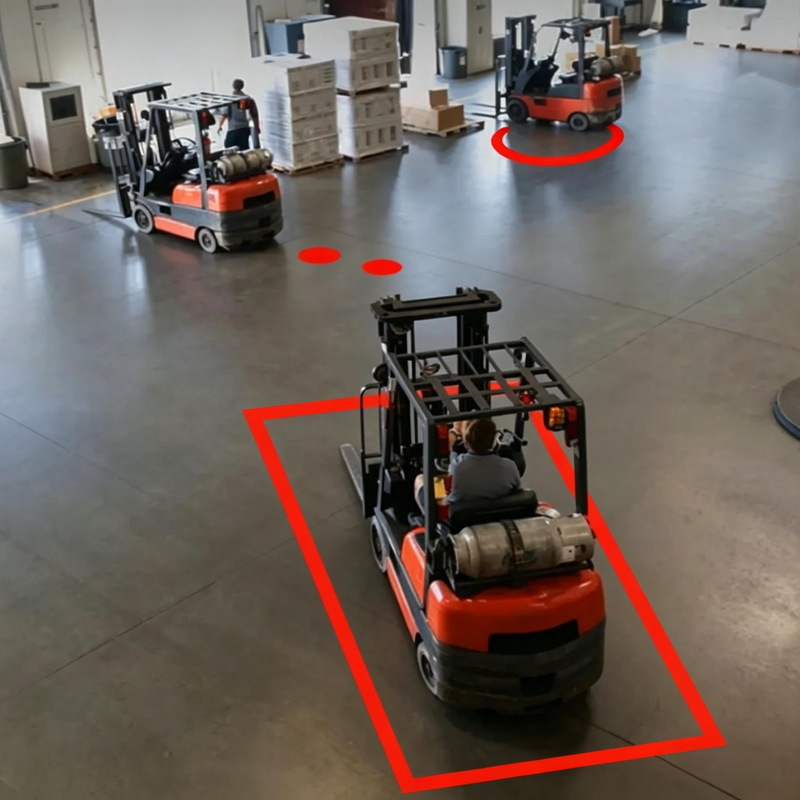
Because of these risks, companies around the world are taking action. The laser line projector market is growing fast. It was worth USD 138.75 million in 2025 and expected to reach USD 255.80 million by 2032. More importantly, pedestrian warning projectors for warehouses — a key part of the virtual line category — hit USD 432 million in 2024 and are projected to grow to USD 1.13 billion by 2033 at a strong annual growth rate of 11.1%. These market trends clearly show that industry leaders see virtual projection as an essential part of modern warehouse safety systems.
Today, Virtual Line Projector technology is widely used for factory floor marking, AGV route guidance, warehouse aisle identification, forklift safety zones, hazardous area warnings, and production line positioning. In large warehouses where forklifts and workers move through the same area, projected laser lines can remain bright and visible even in dusty or low-light environments.
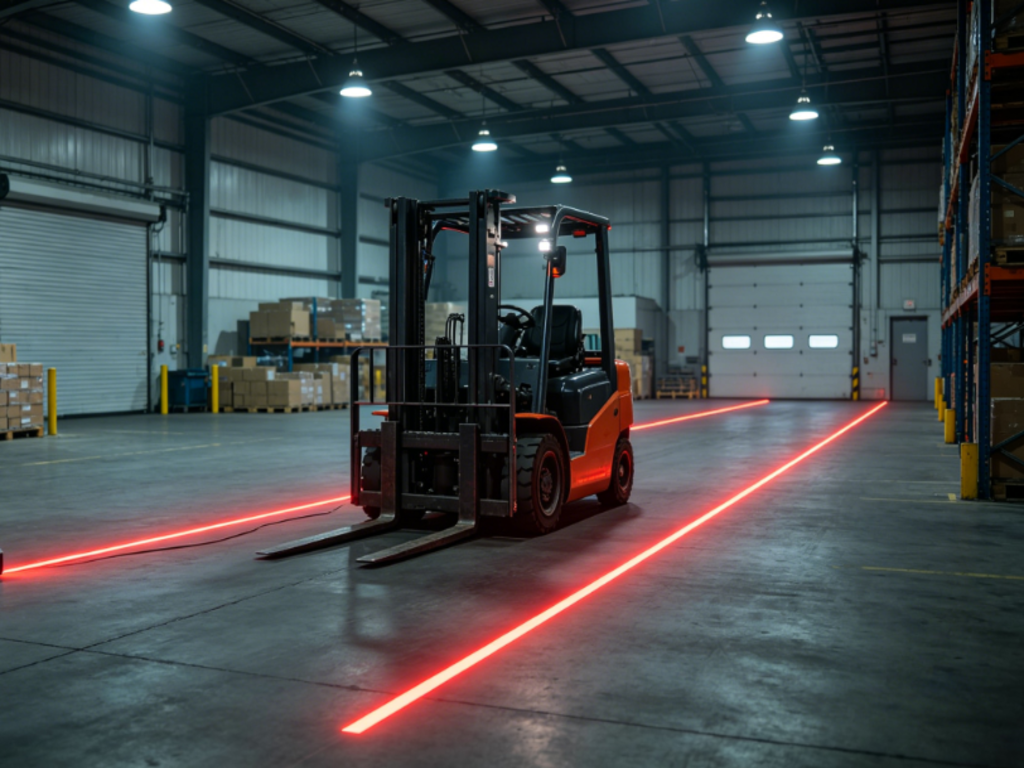
One of the most common applications is virtual laser line projection. A modern laser line projector can display bright red, green, or blue lines directly onto the floor. Red laser lines are often used for dangerous zones and warning boundaries. Green lines are commonly used for pedestrian walkways and safe working areas, while blue lines are suitable for equipment positioning and AGV navigation. Different colors help workers quickly identify specific areas and improve workplace organization.A professional Virtual floor marking projector can support multiple projection ratios such as 1:1.9, 1:3, 1:4, and yellow light 1:2.5 options. These projection formats are suitable for warehouse aisles, production lines, loading zones, and long-distance guidance areas. In addition, the line width can usually be adjusted from 1 cm to 20 cm, making the system flexible for different industrial applications. Narrow lines work well for pedestrian guidance, while wider lines are ideal for forklift lanes and safety boundaries.
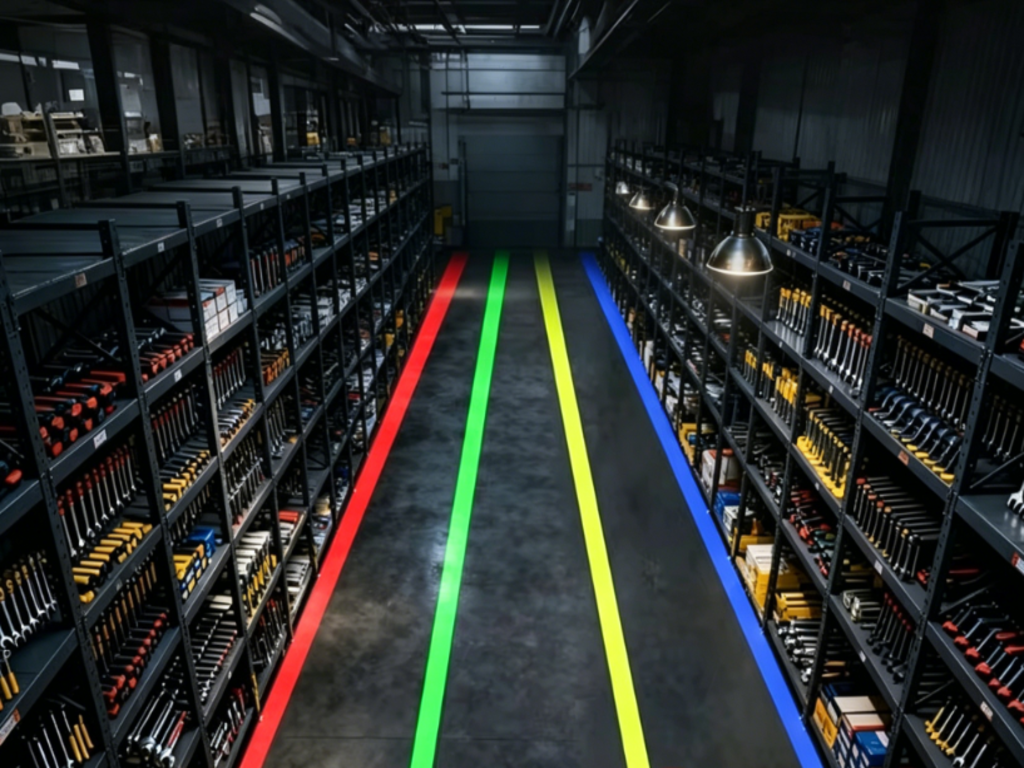
A modern floor line projector also improves workplace visibility. In busy warehouses or manufacturing facilities, workers must quickly recognize pathways, restricted areas, and traffic zones. High-brightness laser projection systems make these markings easier to see than traditional paint or tape, especially in large industrial spaces with changing layouts.Besides line projection, many projector can also display safety warnings directly on floors or walls. These include signs such as KEEP OUT, STOP, Forklift Zone, Warning Area, and Pedestrian Crossing. A Pedestrian walkway projector is especially useful in warehouses where workers and forklifts share the same environment. Dynamic projected warnings attract more attention than traditional static signs and help improve worker awareness in dangerous areas.
As industrial automation continues to grow, the role of the Virtual Line Projector will become even more important. These systems not only improve industrial safety and traffic management but also help businesses reduce maintenance work, improve operational efficiency, and support modern smart factory upgrades. For this reason, more factories, warehouses, and logistics centers are choosing virtual projection technology as a long-term safety solution.