+86 18126095160
 bella@noparde.com



2026-04-25 192
Outdoor logo projector selection errors often lead to common issues: poor visibility in daylight, insufficient brightness at night, blurry or distorted projections, water ingress and short circuits in rainy weather, rapid light decay and equipment burnout under high temperatures, and blurred imaging for long-distance projection.
The core selection logic follows this sequence: ambient light intensity → projection distance & image size → light source type → ingress protection rating → lens focal length → long-term durability.
Ambient light is the key factor for choosing an Outdoor Logo Projector: dim night settings use 10W–35W LED, medium-light commercial areas suit 35W–55W LED or entry laser, high-bright downtown scenarios require 60W–100W professional laser, and daytime outdoor environments need high-performance 110W–160W pure laser projectors for clear, stable projection.
Projection distance and coverage area determine the wattage and lens type of Outdoor Logo Projectors, with power and focal length increasing accordingly: 10W–35W short-throw lenses for 1–3m short distance, 35W–55W zoom lenses for 3–5m commercial use, 60W–100W laser models for 5–10m mid-range scenarios, and 110W+ telephoto laser projectors for long-distance engineering projection over 10m.
3.Light Source Type Comparison & Scene Adaptation
Different light sources serve distinct outdoor scenarios: cost-effective standard LED suits low-to-medium light short-range store use, high-performance laser excels in bright, long-distance and daytime high-end applications, and hybrid light sources work for mid-tier hotels and chain stores, while laser is recommended for strong-light long-term projects and LED for budget-friendly dim short-range needs.
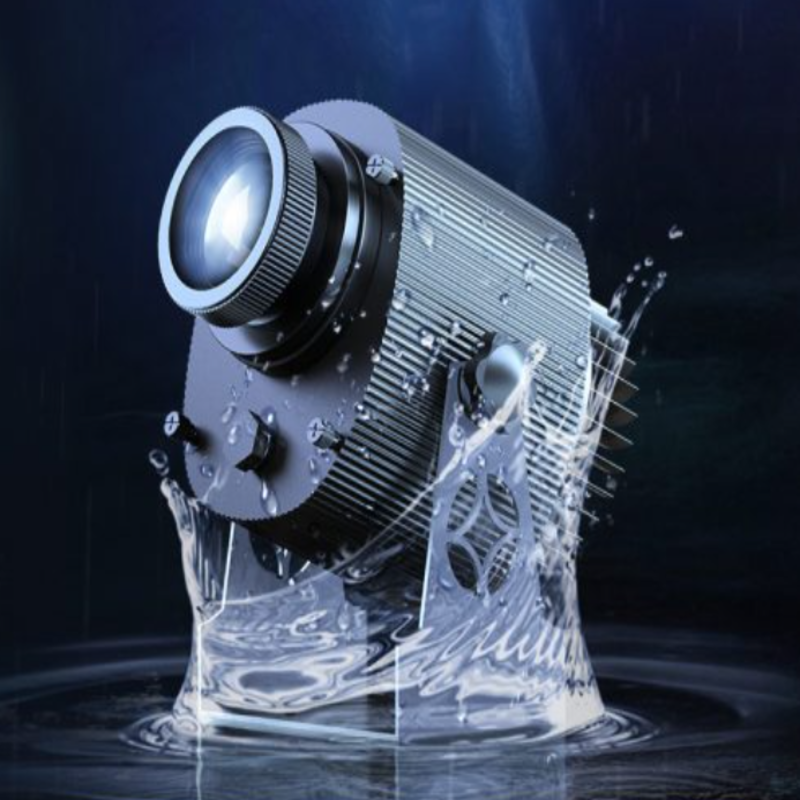
Outdoor projectors are exposed to rain, dust, haze, coastal salt fog and extreme temperature changes, making the IP rating critical for service life. IP54 only provides basic dust and splash protection, suitable for temporary outdoor use only. As the commercial standard, IP65 offers full dustproof and high-pressure waterproof performance, perfect for storefronts and pedestrian streets. IP67 is an upgraded engineering grade with fully sealed structure, short-term immersion resistance and salt fog protection, ideal for coastal areas, scenic spots and harsh open-air environments. Avoid IP54 or lower versions to prevent water leakage, lens fogging and circuit corrosion.
Improper lens selection usually causes image distortion, blurry text and jagged logo edges. Short-throw lenses create large clear images in narrow installation spaces without distortion for small shops. Adjustable zoom lenses with 1.2–2.0x magnification allow flexible image size adjustment, which is universal for chain stores and multi-scene use. Telephoto lenses focus light for stable long-distance projection above 10 meters and prevent picture blurring. Equipped with high-definition DMD chips and coated optical lenses, the projector ensures sharp details and clear small logo patterns without ghosting.
Common Outdoor Selection Mistakes to Avoid
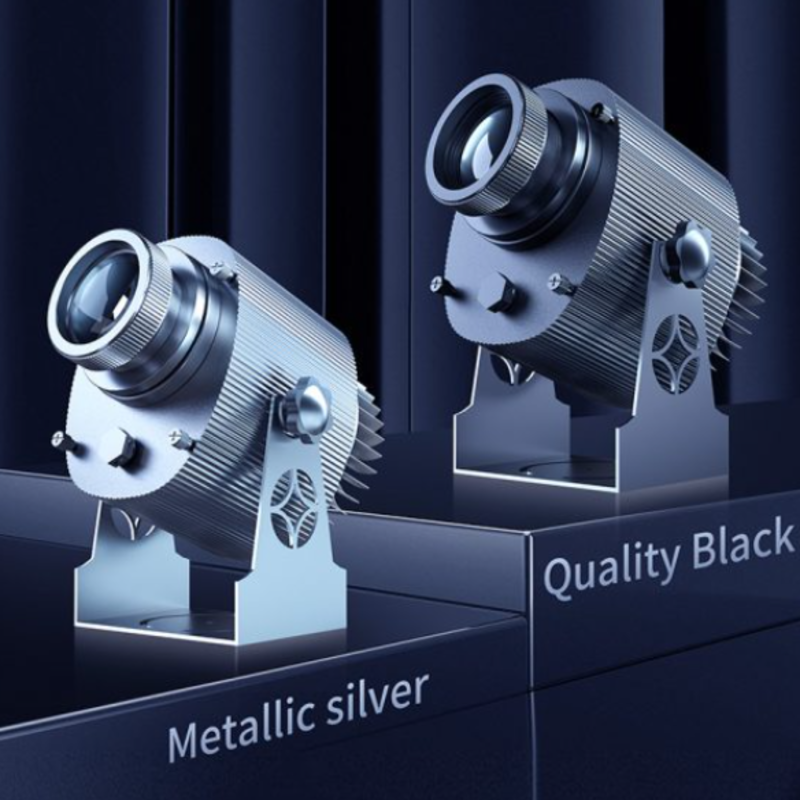
Many buyers only focus on marked lumen values while ignoring light source types. At the same brightness, laser delivers far better anti-glare performance than LED, so high-lumen LED is not recommended for bright business districts.Many users choose low IP ratings without considering actual installation conditions. Fully exposed outdoor areas, coastal regions and dusty factories require IP67, instead of low-grade IP54 or basic IP65 models.Incorrect distance estimation and mismatched lenses lead to poor projection effects. A short-throw lens for long distances causes oversized blurry images, while a telephoto lens for short distances results in tiny, low-utilization visuals.Poor heat dissipation and insufficient wide-temperature adaptability shorten service life. For direct sunlight in summer, select projectors with reinforced aluminum alloy heat dissipation to prevent overheating shutdown and premature aging.Low-cost inferior gobo slides easily fade and deform under high temperatures. For long-term outdoor operation, thick high-temperature resistant metal gobo slides are strongly suggested.
Simple Quick Selection Formula
Match the projector by actual conditions: choose LED for dim night environments and laser for strong light or daytime use.Pick low wattage for short-distance projection, and high power with telephoto lenses for long-distance scenarios.Adopt IP65 for regular urban commercial areas, and IP67 for coastal, fully open-air and engineering projects.For long-term commercial operation, prioritize durable and anti-light-decay models; for temporary events, select porta.