
 +86 18126095160
 bella@noparde.com



2026-09-17 31
A bright commercial street can make a small shop less visible, not more. Every storefront contributes signs, window lighting, street lamps, and reflections. Adding another fixed board may not change where pedestrians look. A logo projector for shop entrances offers a different placement option by putting a branded image on the ground or another surface along the customer's approach.
The useful question is not simply whether the image can be bright. The project has to decide where the logo should land, who should see it, and how long they have to understand it. A pavement image is viewed from an angle and may be crossed by people. A facade image may be read from farther away. The right logo projector for shop promotion depends on that viewing route as much as on the equipment itself.
Artwork comes next. Circular pavement projections benefit from a simple mark, strong contrast, and restrained text. Rotation can draw attention, but moving content must remain recognizable throughout the cycle. If the project needs changing offers, the team should plan separate Gobo artwork for each message and confirm how the chosen device supports replacement. A logo projector for shop should not be selected on the assumption that every glass format or service method is the same.
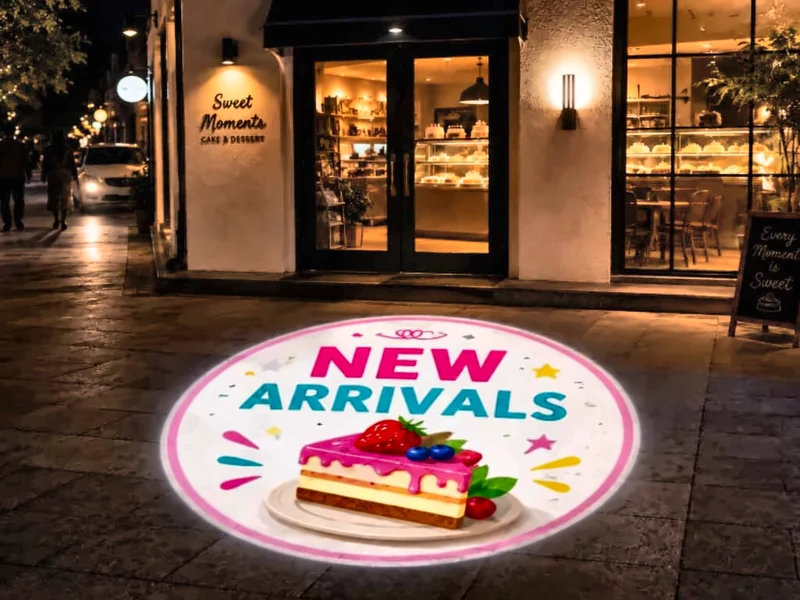
Image size is linked to lens choice, throw distance, and mounting geometry. A customer may ask for the diameter first, but that number cannot be separated from the available position on the wall and the target area on the ground. Site dimensions and a clear photo help Noparde choose a workable optical arrangement. They also reduce the risk of specifying a logo projector for shop display that produces the right image in the wrong place.
Ambient light and surface color affect contrast. Pale paving, dark asphalt, wet stone, and patterned tiles do not present the same image. Nearby window lighting can also compete with the projected field. The project team should review the site during the planned operating hours. That review gives a more useful basis for a logo projector for shop than a daytime photograph alone.
A street-shop project in Poland recorded on 30 March 2026 provides a practical reference. The owner wanted a rotating logo that would stand out at night among many shops and lights. Noparde supplied a customized outdoor projector light mounted 3.5 metres high on the building wall. A 0.33 throw-ratio lens produced a bright circular logo about 1 metre in diameter on the ground. The project material reports that the moving image caught the attention of passersby, supported visits and purchases, and could also present text or new-product information. The arrangement shows how a logo projector for shop use can be matched to one verified height, lens, and target size without treating those values as universal settings.
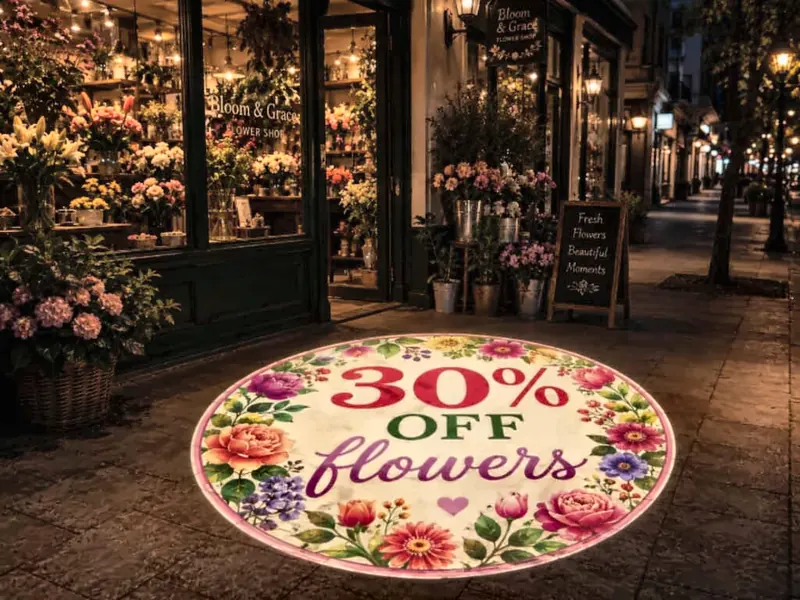
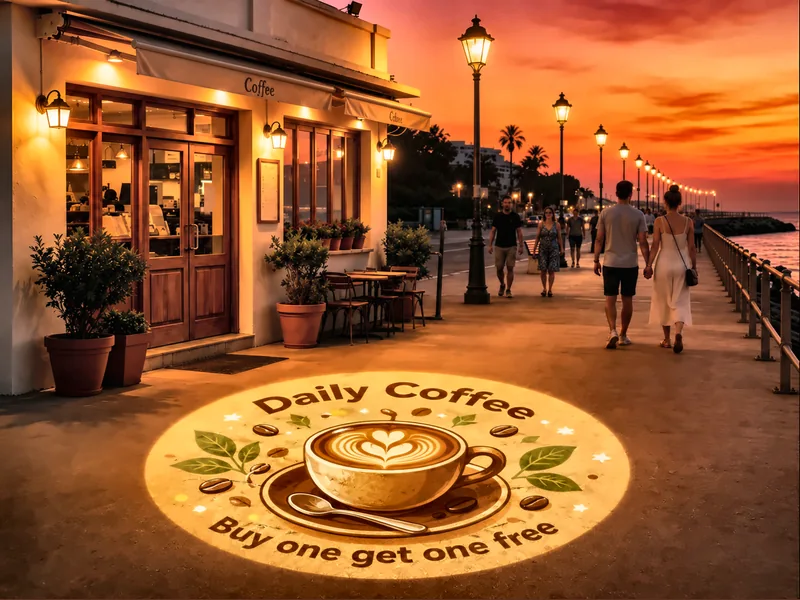
The same planning method applies across retail categories. Cake shop logo projection may favor a product illustration or an opening message. A logo projector for coffee shop promotion may use a cup symbol, offer, or daily feature. A flower shop logo projector may need fine artwork to remain clear against a decorative pavement. These examples can share the idea of a ground image while still requiring different artwork and contrast decisions.
Wall mounting raises practical questions that the product choice alone cannot answer. The mounting surface must support the equipment, the cable route must be planned, and the unit must remain accessible for service. Exterior exposure and local installation rules also need confirmation. A logo projector for shop installation should proceed only after these points are checked for the actual model and site.
Gobo replacement deserves similar care. The Polish customer specifically asked whether the glass could be changed and what tools would be required. The supplied material does not provide that procedure, so a responsible specification must leave it open until the selected model is confirmed. Noparde can then provide the applicable instructions. This keeps a logo projector for shop campaign from being serviced through guesswork.
Rotation should support the message rather than distract from it. A logo with a strong central shape may remain legible as it turns. Dense text can become difficult to follow. Teams should test the artwork at the intended size and consider whether a fixed, rotating, or periodically changed image best serves the storefront. The choice belongs to the campaign goal, not to a general claim that motion is always better.
The Polish example also shows why documented dimensions are valuable. A 3.5-metre installation height, 0.33 throw ratio, and 1-metre projected diameter create a traceable relationship for that site. Another street may have a lower mounting point, a wider pavement, or different viewing angles. Its logo projector for shop setup will need a fresh calculation rather than a copied list of numbers.
For early project discussion, Noparde benefits from a small but specific information set: final artwork, target surface, mounting height, distance, desired image size, site photos, operating hours, and ambient-light conditions. If rotation or multiple Gobos are required, those needs should be stated at the same time. This allows the logo projector for shop to be selected around the real storefront and gives the customer clear points to verify before installation.
Outdoor logo projection works best as part of the shop's visual system. The projected image can attract attention near the entrance, while the facade sign, window display, and staff communication provide detail. A logoprojector for shop does not replace every other channel. It gives the brand a visible point on the customer's path when the artwork, optics, installation, and service plan have been matched to the site.