
 +86 18126095160
 bella@noparde.com



2026-04-10 319
HD custom logo projection light with rotating effects, IP65 waterproof and easy to install, ideal for business branding, parties and outdoor decor.
If you’re new to logo projection (also called logo light projector), it’s easy to feel overwhelmed when shopping. There are products ranging from tens to thousands of dollars, with a bunch of confusing parameters. The biggest mistake many beginners make is not knowing a key fact: logo projection is only visible at night. Direct sunlight during the day is too intense, making even high-power projectors invisible. This dry guide will help you grasp 5 core selection indicators, avoid 4 common pitfalls, choose the right product for your scenario, and recommend a reliable reference brand—Noparde—to help you avoid detours.

Waterproof rating (IP code) is crucial for outdoor use, as logo projectors are mainly used at night, and night dew or sudden rain can easily damage unprotected devices.
Pitfall avoidance tip: Don’t just trust the “waterproof” claim from sellers. Always check the IP rating parameter; if it’s not clearly marked, skip it directly.
Since logo projection is only visible at night, brightness is about clarity in low-light environments, not competing with sunlight. Beginners often fall into the trap of “the higher the power, the better.”
|
Usage Scenario |
Recommended Power |
Lumen Reference |
Description |
|
Indoor Cafés/Exhibition Halls |
15-35W |
500-1000lm |
Controlled indoor light, low power is sufficient, energy-saving and quiet. |
|
Mall Corridors/Store Entrances |
35-50W |
1000-2000lm |
Moderate night light, balances clarity and energy consumption. |
|
Open Plazas/Unshielded Outdoor Areas |
50-100W |
2000-3000lm |
Dark night environment, high power ensures clear visibility from a distance. |
Buying advice: Choose according to your actual night scenario. For example, a roadside store only needs 35W—there’s no need to spend more on a 100W model, which wastes electricity and may be dazzling.
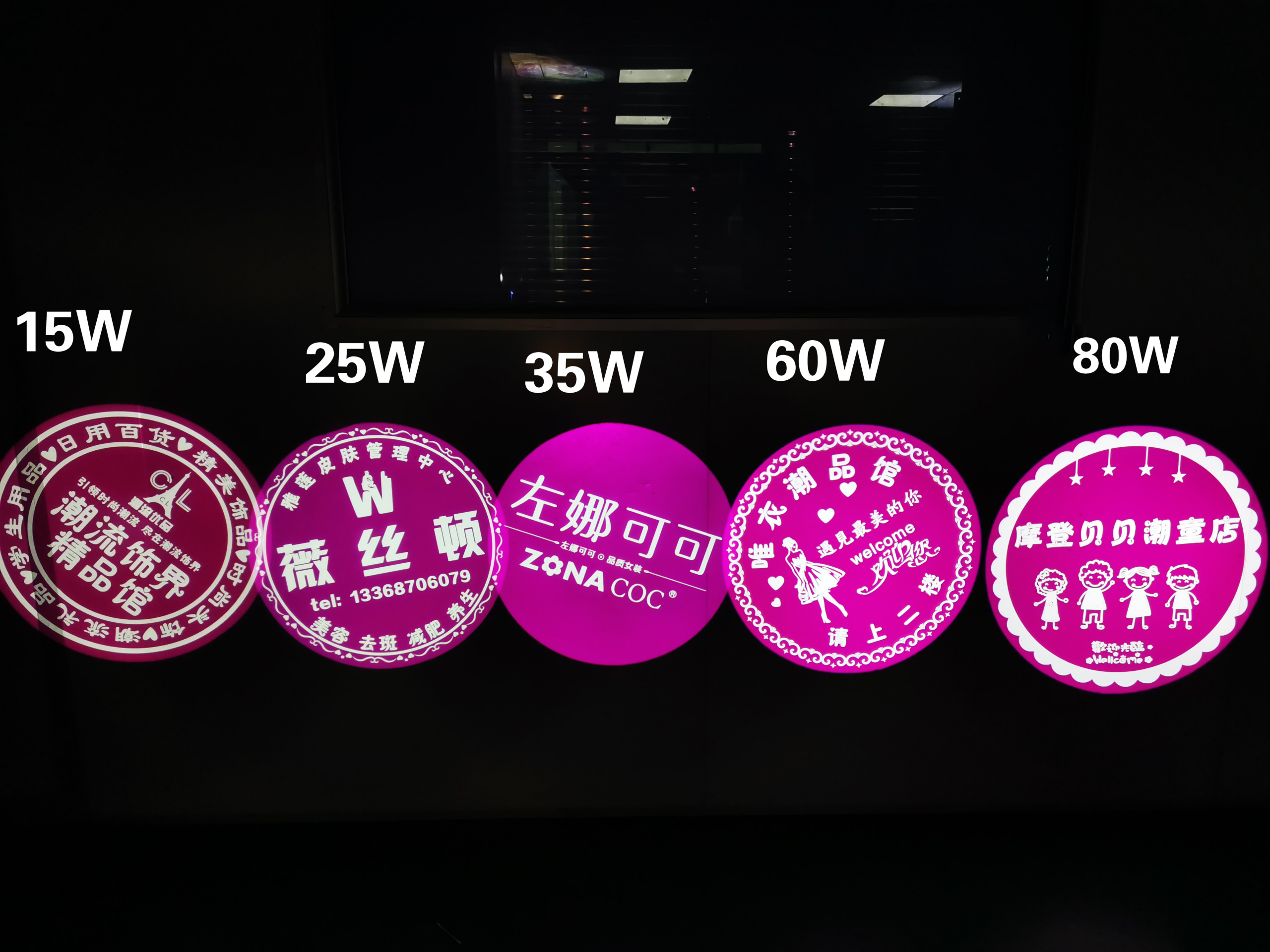
Projection distance determines how large and clear your logo can be at night, and the key is the “projection ratio” (projection distance: image width).
Calculation method: To get a 1m-wide logo, if the projection ratio is 0.3, the installation distance is 3.3m, and so on.
Customization is the core value of logo projection, and beginners often overlook the “convenience of pattern replacement.”
Practical tip: If your brand updates its logo or runs seasonal promotions, be sure to choose a model with replaceable patterns to avoid repurchasing.
Installation convenience directly affects user experience and safety, especially since logo projectors are installed outdoors for night use.
Installation key point: Reinforce outdoor installations to prevent them from being blown down by wind; ensure the power interface is waterproof to extend service life.
This is the most common pitfall! Many cheap models claim to be “waterproof” but actually have an IP rating below IP44. They have thin shells and poor sealing—one rainstorm will cause water to enter and short-circuit, making them unreparable.
Solution: Even on a tight budget, don’t buy outdoor models under $30. Choose at least IP65 rating; for example, Noparde’s entry-level logo light projector is reasonably priced but has reliable IP65 waterproofing.
Blurry projection is a common problem for beginners, and it’s not necessarily a quality issue:
Pitfall avoidance tip: Check reviews before buying for feedback on “blurriness” or “focus difficulty”; choose brands with reliable optical components.
The core of a logo light projector is the LED bulb, and its lifespan directly affects usage costs—especially since it’s used every night.
Buying focus: Check the bulb brand (e.g., Cree, Osram), and check the heat dissipation design—aluminum shells dissipate heat better than plastic ones, extending bulb life.
Many beginners only look at the price and don’t confirm if the pattern is replaceable. When they want to change the logo or promotional slogan later, they find they have to replace the entire device.
Solution: Prioritize models with replaceable gobo sheets. Even if you don’t need to change patterns now, it leaves room for the future and offers better cost performance.
III. Scenario-Based Buying Advice: Choose According to Needs, No Waste
Core needs: Quiet, energy-saving, clear at night.
Recommended configuration: 15-35W power, IP44 protection, replaceable patterns, short-focus lens.
Pitfall: Don’t choose outdoor models—they are large, energy-consuming, and low power is sufficient for indoor night use.
Core needs: Waterproof, durable, clear at night.
Recommended configuration: 35-50W power, IP65+ protection, standard-focus lens, glass lens.
Pitfall: Install in a location away from direct water; ensure the power interface is waterproof.
Core needs: Portable, easy to install, quick pattern replacement.
Recommended configuration: 35-50W power, IP54 protection, bracketed installation, replaceable gobo sheets.
Pitfall: Choose lightweight models to avoid handling trouble; pay attention to battery life or power adaptation.
Core needs: High brightness, strong waterproofing, long lifespan.
Recommended configuration: 50-100W power, IP67 protection, long-focus lens, high-quality LED bulbs.
Pitfall: Secure installation to prevent wind and tipping; regularly check waterproof seals.
As a brand focusing on logo projection, Noparde’s product design is very suitable for beginners. It can be used as a selection reference (not hard advertising—we simply think they avoid pitfalls well):
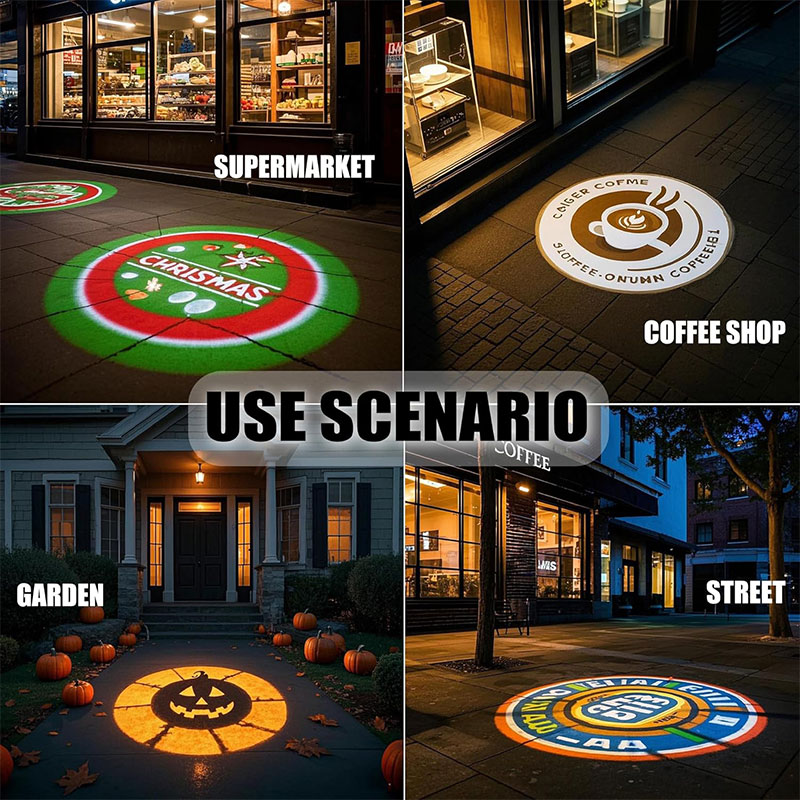
Many users feedback that Noparde’s logo light projector has been used outdoors for more than a year, experiencing heavy rain, and still works normally with clear patterns at night—exactly the reliability beginners need.
Logo projection is a great tool to enhance brand exposure at night. Choose the right one, and it can be used for years; choose the wrong one, and it will waste money and affect the effect. Follow this guide, grasp the core indicators, avoid common pitfalls, and refer to the design logic of reliable brands—even beginners can choose the right logo projection. If you’re still unsure, it’s recommended to buy a small-power sample to test; if you’re satisfied, purchase in bulk to reduce risks.