
 +86 18126095160
 bella@noparde.com



2025-09-10 696
Walk into a busy retail district on a weekend, and you’ll notice a common problem: dozens of stores blend together, their logos faded by harsh overhead lights, hidden behind cluttered displays, or simply too small to catch a shopper’s eye. For small business owners like Maria, who runs a boutique in downtown Portland, this wasn’t just a minor annoyance—it was hitting her bottom line. “I’d watch people walk right past my store because they didn’t even notice my logo,” she says. “I tried repainting the sign, adding neon strips, even putting up flyers—but nothing worked. That’s when I found a shop logo projector, and it changed everything.”
If you’ve ever struggled with faint in-store logos, unmemorable branding, or the hassle of updating static signs, you’re not alone. Retailers, café owners, and pop-up shop operators across the globe face the same challenge: how to make their brand stand out in a crowded space without breaking the bank or overhauling their decor. The solution? A shop logo projector—a compact, versatile tool that turns blank walls, floors, or even windows into dynamic brand displays. In this article, we’ll break down real-world success stories, dive into the key features that make these projectors a game-changer, and answer the question every business owner asks: How to project letters on wall (and logos!) like a pro.
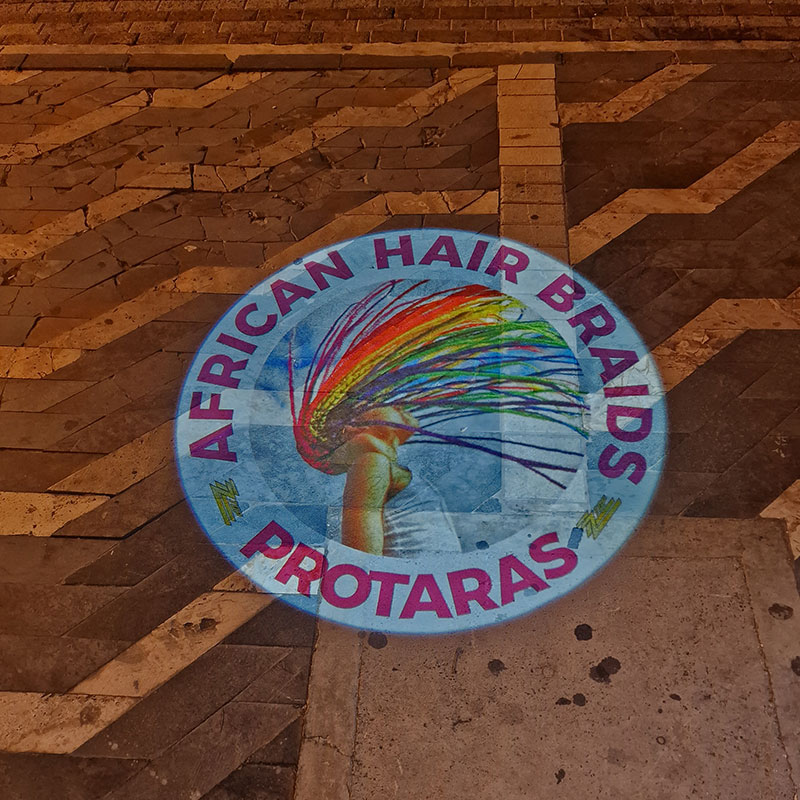
Branding isn’t just about looking good—it’s about being seen, remembered, and chosen. These three business owners learned that a simple projector could fix their biggest visibility pain points, no major renovations required.
Maria’s boutique specializes in handmade jewelry and sustainable clothing, but her storefront had a problem: the logo painted above the door was barely visible in both natural daylight and evening streetlights. “Even when people stepped inside, the logo on the back wall was washed out by my track lights,” she explains. “I’d have customers ask, ‘What’s the name of your shop again?’—that’s when I knew I needed a change.”
She invested in a compact shop logo projector and mounted it near her cash register, pointing it at a blank white wall behind her display racks. Overnight, her logo—an elegant script font with a tiny leaf motif—glowed softly but clearly, even with her store lights on. “Within a week, I had people saying, ‘I saw your logo from the street and had to come in!’” Maria says. She even started using the projector to cycle between seasonal messages: “Fall Collection In!” or “Holiday Gifts Starting at $25.” “It’s not just a logo tool—it’s an advertising projector that keeps my branding fresh,” she adds.
Jake’s family-run café in Chicago had a dead space: a plain gray wall near the entrance that felt cold and uninviting. “We had our logo on mugs and menus, but the wall was wasted,” Jake says. “We wanted something that made people stop, take a photo, and share it on Instagram—something that felt like part of our cozy vibe.”
They chose a light projection logo device with adjustable brightness and a wide projection angle. Instead of just displaying their café logo (a coffee cup with steam curling into a heart), they paired it with rotating text: “Good Morning, Chicago!” in the mornings, “Fresh Pastries Today!” in the afternoons, and “Cozy Up with Hot Cocoa” in the evenings. “That wall went from being a negative to our most popular spot,” Jake laughs. “Customers take selfies with the projected text all the time—we’ve gained 500 new Instagram followers in three months just from those posts.”
The best part? When they rebranded their menu to focus on vegan options, they didn’t have to repaint or buy new signs—they just updated the projector text in 60 seconds. “Static signs are a nightmare for small businesses—if you want to change a message, you’re stuck buying something new,” Jake says. “With the projector, we’re flexible. It’s saved us hundreds of dollars.”
Lila sells vintage home goods at pop-up markets and craft fairs, but she struggled with consistency. “At every market, I’d set up a table, hang a banner, and hope people noticed me—but the banner would get wrinkled, or the wind would blow it over,” she says. “I needed a way to brand my space that was easy to carry and always looked professional.”
A portable shop logo projector was her answer. She packs it in her suitcase (it’s about the size of a paperback book) and uses a small battery pack to power it—no electrical outlet needed. At markets, she projects her logo onto a white sheet hung behind her table, and adds projector text like “Vintage Finds Under $50” or “Cash Only—Thanks!” “It’s so much easier than hauling a banner around, and it looks way more polished,” Lila says. “Last month, a customer told me they found my booth because my logo was the only one that stood out in the crowd. That’s the power of a good projection.”
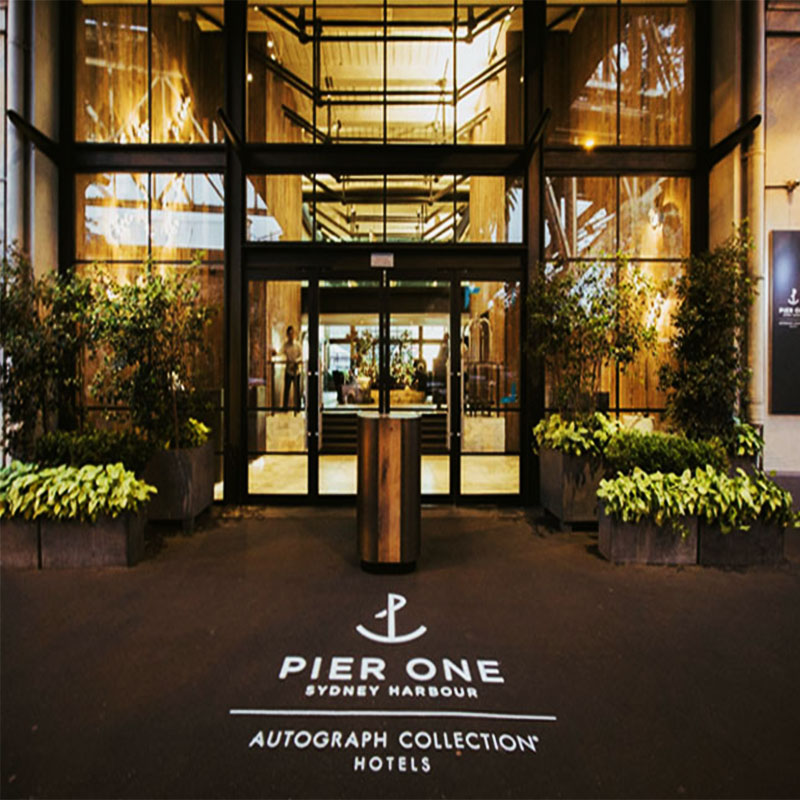
Not all shop logo projectors are created equal—so what should you look for to ensure it fixes your faint logo problem and fits your business needs? Here are the non-negotiable features and specs that make a projector worth investing in:
The biggest reason in-store logos look faint is that they can’t compete with your store’s lighting. Look for a projector with at least 500 lumens (the measurement of light output)—this ensures your logo or text will be visible even in well-lit spaces (like Maria’s boutique, which uses bright track lights). For darker spaces (like a wine bar or evening pop-up), 300 lumens is enough—but 500+ is safer for versatility.
Pro tip: Choose a projector with adjustable brightness. This lets you dim it for intimate settings (like a Valentine’s Day event) or crank it up for busy weekends when your store is packed with people.
Whether you have a tiny café (like Jake’s) or a large retail store, you need a projector that can adapt to your space. Look for a model that offers a projection size range of 10–100 inches (diagonally) and a projection distance of 1–10 feet. This means you can project a small logo onto a wall near your cash register (1–2 feet away) or a large logo onto a back wall (8–10 feet away) without losing clarity.
Maria’s projector, for example, has a 3–8 foot distance range—perfect for her 10x12 foot boutique. She projects a 30-inch logo onto her back wall, which is just big enough to be noticeable but not overwhelming. Lila’s portable model has a 1–5 foot range, so she can project a 15-inch logo onto her sheet at markets without taking up too much space.
The best shop logo projectors aren’t just for logos—they let you project text, graphics, or even short videos (though videos are less common for in-store use). Look for a projector that works with:
This versatility turns your projector into an advertising projector—not just a logo tool. Jake’s café uses this feature to update their daily specials, and Lila uses it to share important info (like “Cash Only”) at markets.
If you’re a pop-up shop owner (like Lila) or need to move your projector between spaces, portability is key. Look for a lightweight model (under 2 pounds) that’s battery-powered (or has a USB-C port for battery packs). For fixed stores (like Maria’s boutique), a plug-in model is fine—but battery power adds flexibility (e.g., you can move it to a window display for a weekend sale).
Most plug-in projectors use a standard USB cable, so you can plug them into a power strip or wall outlet. Battery-powered models typically last 4–6 hours on a single charge—enough for a full day at a market.
You don’t need to be a tech expert to use a shop logo projector—so avoid models that require complicated software or professional installation. The best ones set up in 5 minutes or less:
Maria, who admits she’s “not great with tech,” says her projector was “so easy to set up, I did it myself in 3 minutes.” Jake’s team updates their light projection logo every week—no IT help needed.
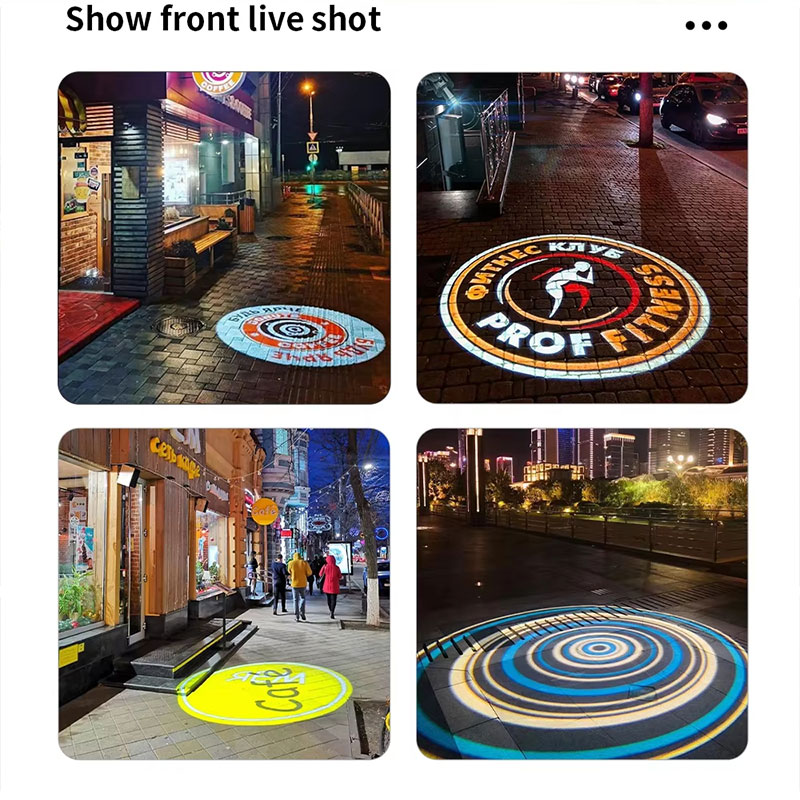
You’ve got your shop logo projector—now how do you make sure your projections look crisp, professional, and exactly how you want them? Follow these simple steps to avoid common mistakes and get the best results:
The surface you project onto matters more than you think. For the clearest logo or text, use a flat, light-colored surface (white, cream, or light gray). Dark or textured surfaces (like brick or dark wood) will make your projection look dull—if you have a dark wall, hang a white sheet or a piece of white poster board to create a “projection screen.”
Jake’s café had a gray wall, so he hung a white canvas (thrifted for $10!) behind his counter—it made his logo and text pop without costing a fortune. Lila uses a white sheet at markets because it’s lightweight and easy to fold up.
To avoid blurry or distorted projections, make sure the projector is pointed directly at the surface (not at an angle). If the projector is tilted up or down, your logo will look stretched. Most projectors have a built-in keystone correction feature—this lets you adjust the image to be square, even if the projector isn’t perfectly aligned.
Pro tip: Use a tripod or mounting bracket to keep the projector stable. A wobbly projector will create a shaky image—something Jake learned the hard way. “At first, I set the projector on a stack of books, and every time someone walked by, it would shake,” he says. “A $15 tripod fixed that instantly.”
Once the projector is positioned, use the focus ring (usually on the front of the device) to sharpen the image. If your logo looks blurry, twist the ring until the edges are clear. Then, adjust the size by moving the projector closer to or farther from the surface—remember, the farther away it is, the larger the projection (but make sure it doesn’t get too dim!).
Maria spent 2 minutes adjusting her projector: “I moved it 6 inches closer to the wall to make the logo smaller (it was too big at first) and twisted the focus ring until the leaf in my logo was sharp. That’s it—no fancy tools needed.”
Your store’s lighting changes throughout the day (natural light in the morning, artificial light in the evening), so test your projection at different times to make sure it’s always visible. If it looks faint in the afternoon, crank up the brightness. If it’s too bright at night, dim it down.
Lila does this every time she sets up at a market: “I arrive an hour early to test the projection in the sunlight, and then I check it again when the sun goes down. It only takes 20 seconds to adjust the brightness, and it ensures my logo looks good all day.”
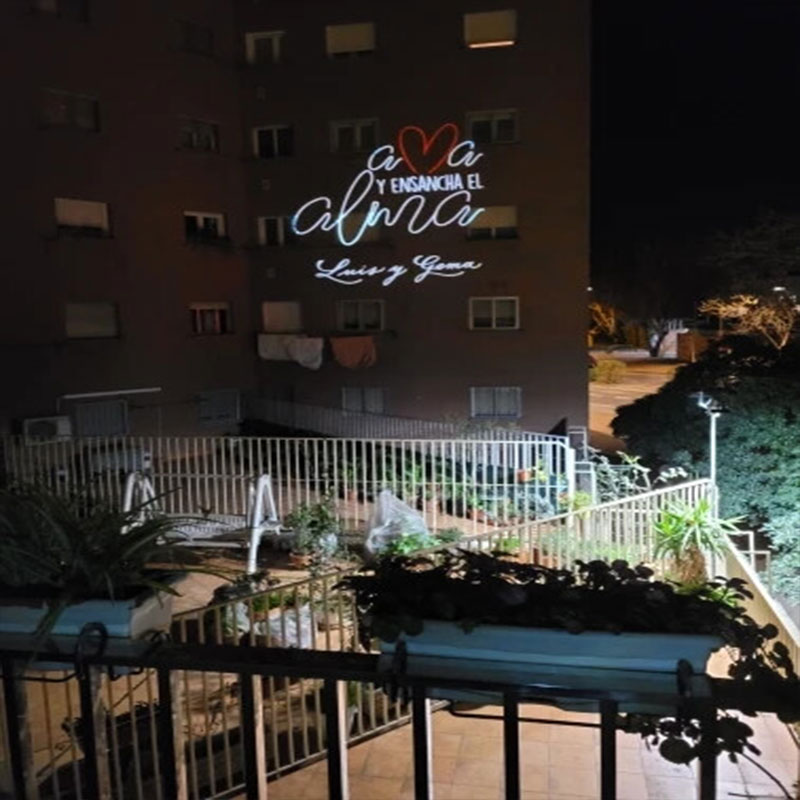
If you’re on the fence about buying a shop logo projector, consider this: static signs (like painted logos, neon signs, or banners) have major drawbacks that projectors solve:
Faint in-store logos don’t just look unprofessional—they cost you customers. Every time a shopper walks past your store without noticing your brand, or forgets your name after visiting, you’re missing out on sales, repeat business, and word-of-mouth referrals.
A shop logo projector fixes that problem in one simple step. It turns blank walls into dynamic brand displays, lets you update your message in seconds, and works in any space—whether you’re a small boutique owner (like Maria), a café operator (like Jake), or a pop-up vendor (like Lila).
So stop settling for faint logos. Invest in a shop logo projector, learn how to project letters on wall like a pro, and watch your brand go from “invisible” to “unmissable.” Your customers will notice—and so will your bottom line.