
 +86 18126095160
 bella@noparde.com



2025-08-25 1,095
In today’s fast-paced industrial and commercial environments, maintaining a safe workplace is not just a legal obligation but a critical factor in operational efficiency and employee well-being. Traditional safety signs—while essential—often fall short in high-traffic, low-light, or cluttered spaces, where visibility can mean the difference between a near-miss and a costly accident. This is where projected safety signage solutions emerge as a game-changing innovation, offering unmatched visibility, adaptability, and compliance across diverse settings, from bustling factories to busy warehouses and dynamic office spaces.
For decades, businesses relied on static safety signs—printed posters, metal plaques, or adhesive decals—to communicate hazards, warn of risks, and guide movement. However, these traditional solutions come with inherent limitations: they can be obscured by equipment, damaged by environmental factors, or overlooked in areas with poor lighting. In contrast, projected safety signage uses advanced projection technology to cast clear, bright safety messages directly onto floors, walls, ceilings, or equipment, ensuring they remain visible even in challenging conditions.
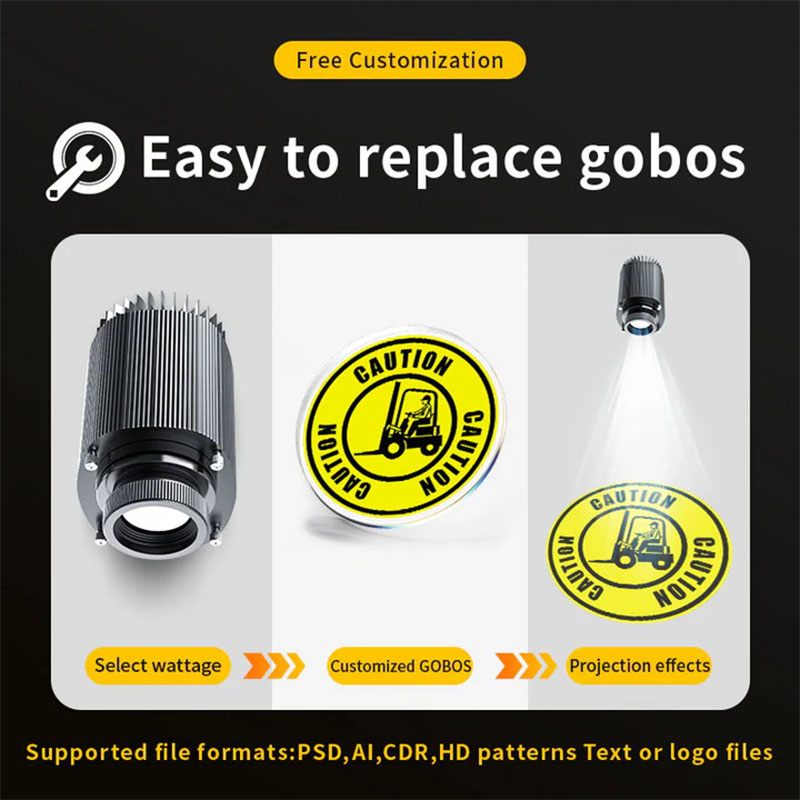
At the heart of this technology are specialized devices like the led safety sign projector and led floor sign projector, which leverage energy-efficient LED bulbs to produce high-contrast, weather-resistant projections. Unlike traditional signs, which are fixed in place, these projectors can be easily repositioned to adapt to changing work environments—whether a factory reconfigures its production line, a warehouse adds new storage zones, or an office undergoes a layout redesign. This flexibility makes projected signage a cost-effective long-term investment, eliminating the need for constant replacement of static signs.
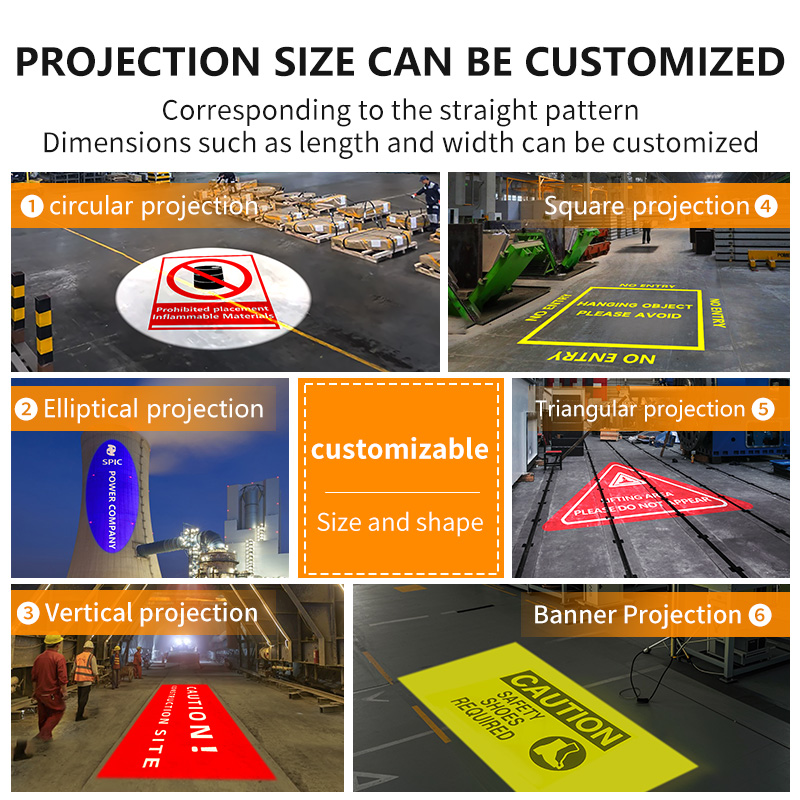
Projected safety signage solutions are designed to address specific hazards in diverse settings, with specialized variants tailored to unique risks. Let’s explore their applications across key environments:
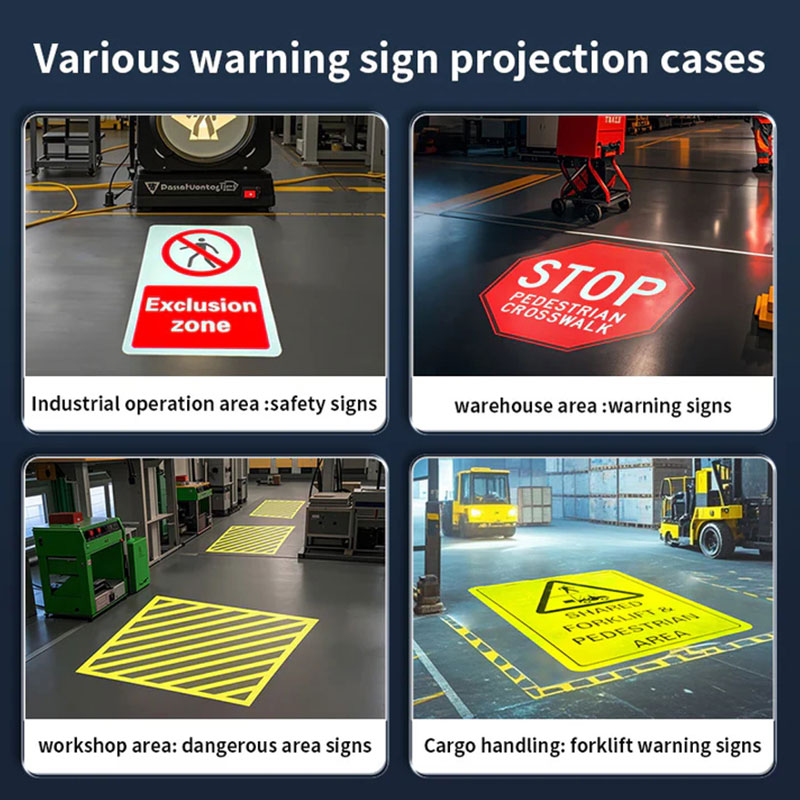
Factories are dynamic spaces with moving machinery, heavy equipment, and constant foot traffic—making them prime locations for accidents. Here, led safety sign projectors excel at highlighting hazards such as moving parts, hot surfaces, or restricted zones. For example, a projector can cast a bright "Caution: Moving Conveyor" message directly onto the floor near equipment, ensuring operators and pedestrians notice the risk from a distance.
In high-risk areas where forklifts and workers share space, forklift safety projector lights are invaluable. These devices project bold, eye-catching symbols—such as a red stop line or a pedestrian crossing—onto the floor, alerting both forklift operators and workers to each other’s presence. This real-time visual cue significantly reduces the risk of collisions, which account for a large percentage of factory accidents.
Warehouses face unique safety challenges, including narrow aisles, stacked inventory, and frequent movement of pallet jacks and forklifts. Static signs here are often blocked by boxes or pallets, rendering them ineffective. Led floor sign projectors solve this by casting messages directly onto the floor, where they remain visible even in cluttered spaces. Common applications include marking emergency exits, designating pedestrian walkways, or warning of low-hanging obstacles.
For warehouses with overhead cranes, crane safety projectors are a critical addition. These specialized projectors cast a visible "danger zone"—often a red circle or grid—on the floor beneath the crane’s path, clearly indicating areas where workers should not stand. This proactive warning system prevents accidents caused by falling loads or sudden crane movements, which can have devastating consequences.
While offices may seem less hazardous than industrial settings, they still require clear safety communication—especially in areas like server rooms, stairwells, or during emergency evacuations. Projected signage here offers a sleek, unobtrusive alternative to traditional signs, maintaining aesthetic appeal while ensuring compliance. For instance, an led safety sign projector can cast a subtle "Fire Exit" arrow onto a wall, guiding occupants to safety during a power outage when electric signs might fail.
In open-plan offices, projectors can also be used to mark social distancing zones, emergency assembly points, or restricted areas (e.g., "Authorized Personnel Only" in IT rooms). Their adaptability makes them ideal for evolving workplace needs, such as post-pandemic safety protocols or temporary construction zones within office buildings.
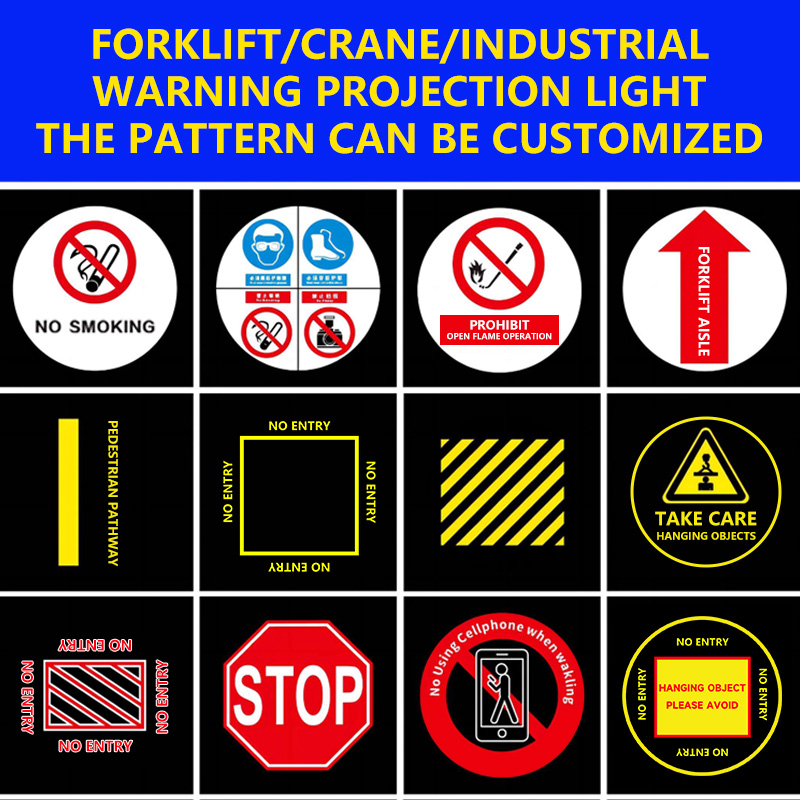
One of the most compelling advantages of projected safety signage solutions is their ability to meet or exceed global safety standards, ensuring businesses remain compliant with regulations such as OSHA (Occupational Safety and Health Administration) in the U.S., CE marking in the EU, and ISO 3864 for safety signs.
Led safety sign projectors and related devices are designed to display standardized symbols and colors—such as red for danger, yellow for caution, and green for safety—aligning with international guidelines. This consistency is crucial, as it ensures workers, regardless of language proficiency, can quickly interpret safety messages. For example, a forklift safety projector light displaying a universal "yield" symbol is immediately recognizable to all employees, reducing confusion and response time.
Moreover, projected signs are highly customizable, allowing businesses to include site-specific information—such as equipment IDs, safety protocols, or emergency contact details—without compromising compliance. This flexibility is particularly valuable for large organizations with multiple locations, as it enables consistent safety messaging across sites while adapting to local regulations.
The shift toward projected safety signage is driven by its numerous advantages over traditional solutions:
With a range of options available—from led safety sign projectors to specialized crane safety projectors—selecting the right solution requires careful consideration of your facility’s unique needs. Here are key factors to evaluate:
A leading logistics company operating a 500,000-square-foot warehouse recently implemented led floor sign projectors and forklift safety projector lights after experiencing a spike in near-miss collisions between workers and forklifts. Within three months, the results were striking:
The company also noted cost savings, as they no longer needed to replace damaged static signs or repaint floor markings. The projectors’ adaptability proved invaluable during peak seasons, when the warehouse reconfigured its layout to handle increased inventory.
As technology advances, projected safety signage solutions are becoming even more sophisticated. Modern models now integrate with IoT (Internet of Things) systems, allowing them to trigger alerts based on real-time data—for example, a crane safety projector could activate automatically when a crane is in use, or a floor projector could flash a warning when a fire alarm is triggered.
Additionally, advancements in LED technology are making projectors more energy-efficient and durable, while wireless connectivity enables remote programming and monitoring. These innovations are set to further enhance the effectiveness of projected signage, making it an indispensable tool for workplace safety.
Projected safety signage solutions—from led safety sign projectors to specialized devices like forklift safety projector lights and crane safety projectors—are revolutionizing how businesses communicate hazards and protect their employees. By offering unmatched visibility, flexibility, and compliance, these technologies address the limitations of traditional signage, ensuring safety messages are seen and acted upon in even the most challenging environments.
Whether in a factory, warehouse, or office, investing in projected safety signage is not just a commitment to compliance—it’s a commitment to creating a safer, more efficient workplace where employees feel valued and protected. As industries continue to evolve, projected signage will undoubtedly play a central role in shaping the future of workplace safety.