
 +86 18126095160
 bella@noparde.com



2026-11-06 11
Buildings are not only places for work, shopping, or living. They can also become large display surfaces for advertising, brand promotion, and decorative lighting. With the development of projection technology, more businesses are choosing a building facade projector to display logos, images, and custom patterns directly onto building walls.Unlike traditional outdoor lights, a building projection system can show clear images, text, and graphics on different building surfaces. It offers a flexible way to attract attention without installing large signs or changing the building structure.Whether used for hotels, shopping malls, office buildings, or commercial events, a building facade projector can turn an ordinary exterior wall into an eye-catching visual display.
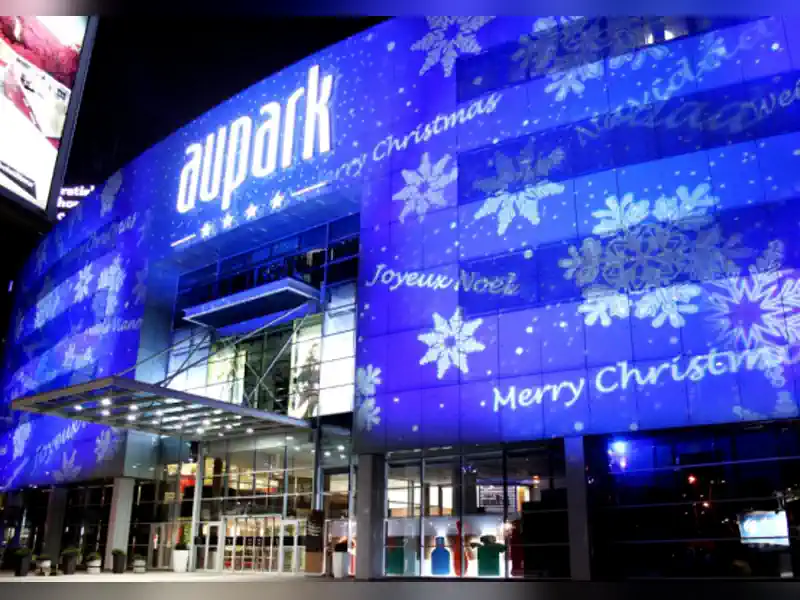
A building facade projector is a lighting device designed to project images, logos, text, or patterns onto the exterior walls of buildings. It usually uses a high-power LED light source and a custom optical lens to create a clear image at a certain distance.The projected content can be customized according to different needs. For example, a hotel can display its brand logo, a shopping mall can show promotional graphics, and a commercial building can display decorative patterns during festivals.Compared with traditional outdoor lighting, projection lighting offers more design choices. Instead of simply lighting up a wall, it allows businesses to display specific visual content on the building surface.Some projectors support static images, while others can create rotating or dynamic effects. The right option depends on the application, projection distance, required brightness, and image size.
The working process of a building projection system is simple. A projector is installed at a suitable position, either on the ground, a nearby building, or another stable mounting point. It then projects a selected image onto the target facade.The main components include:
LED light source: Provides the brightness needed for outdoor projection.
Optical lens: Controls the projection distance, focus, and image size.
Gobo glass: Contains the custom logo, text, or pattern to be projected.
Cooling system: Helps control the operating temperature during long working hours.
Housing: Protects the equipment from dust, rain, and other outdoor conditions when designed with suitable protection.
For a building facade lighting projector, installation distance and projection angle are important factors. A longer projection distance may require a different lens, while a larger building wall may need a higher-power projector or multiple projectors.Before installation, it is important to check the wall size, surface color, surrounding light, and distance between the projector and the building.
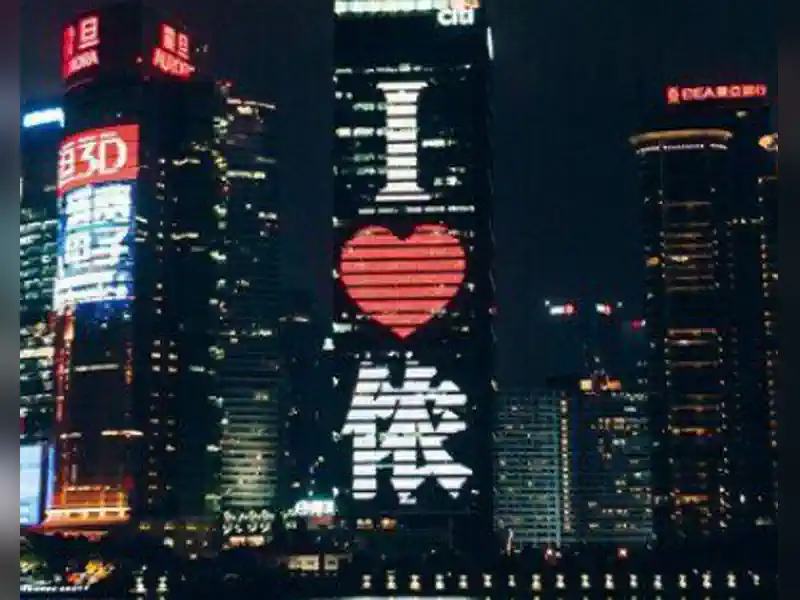
A building facade projector can be used in many commercial and architectural environments. Its flexible display options make it suitable for both advertising and decoration.
Hotels and resorts often use exterior lighting to create a strong first impression. Projectors can display hotel logos, brand names, or decorative patterns on exterior walls.For example, a hotel can project its logo near the main entrance to help guests recognize the building. During holidays or special events, the displayed image can also be changed to match the occasion.
Shopping malls need effective ways to attract visitors and promote their brands. A building facade advertising projector can display promotional images, logos, and seasonal graphics on large exterior walls.Compared with traditional printed banners, projection content can be changed by replacing the gobo or using a suitable rotating projection system. This gives businesses more flexibility when planning different advertising campaigns.
Office buildings can use projection lighting to display company logos, names, and brand graphics. This is especially useful for buildings with large blank exterior walls.A projected logo can help improve brand visibility and make the building easier to recognize at night.
During Christmas, New Year, product launches, and other public events, building projection can create attractive visual effects.Businesses can use custom snowflake patterns, festive images, or event logos to decorate exterior walls. Dynamic projection models can also create movement to make the display more eye-catching.
Choosing the right projector is important for achieving clear images and reliable outdoor performance. Several factors should be considered before purchasing.
|
Selection Factor |
What to Consider |
|
Power |
Choose suitable wattage according to ambient light and projection distance. |
|
Projection Distance |
Check the distance between the projector and the building wall. |
|
Image Size |
Select a suitable lens to achieve the required projection size. |
|
Brightness |
Higher ambient light may require a more powerful projector. |
|
Protection Rating |
Choose suitable waterproof and dustproof protection for outdoor installation. |
|
Projection Content |
Decide whether you need a static logo, custom pattern, or rotating image. |
|
Installation Position |
Make sure the mounting position is stable and provides a suitable projection angle. |
For a large building projection system, the required brightness and projection distance need special attention. Large walls and long-distance applications may require high-power equipment, suitable optical lenses, or several projectors working together.
Traditional signs are widely used for building identification and advertising. However, they may require additional installation space, fixed structures, and regular maintenance.A building projection system offers several different advantages.
|
Comparison |
Traditional Building Signs |
Building Projection |
|
Display Content |
Usually fixed |
Can be customized |
|
Content Changes |
May require new signs |
Can change by replacing projection patterns |
|
Installation |
Requires sign structures |
Requires projector mounting |
|
Visual Effect |
Static display |
Static or dynamic projection |
|
Advertising Use |
Fixed brand information |
Logos, graphics, and promotional images LOGO |
|
Design Flexibility |
Limited by sign size and shape |
Flexible image and pattern options |
One important advantage is content flexibility. Businesses can use different projection patterns for different seasons, promotions, or events without replacing an entire sign structure.However, projection lighting works best when the building surface and surrounding light conditions are suitable. It is important to select the right equipment based on the actual installation environment.
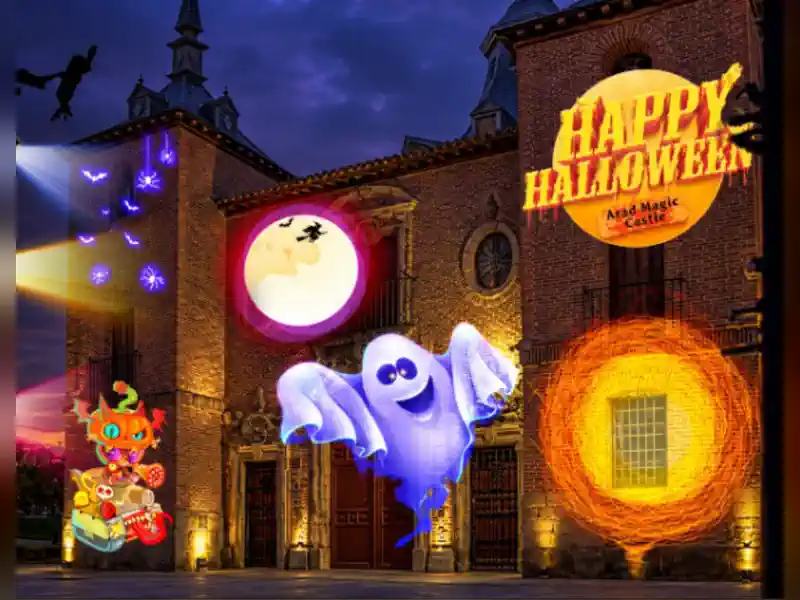
A building facade projector provides a flexible way to display logos, advertising images, and decorative patterns on exterior walls. From hotels and shopping malls to office buildings and event spaces, it offers new possibilities for outdoor branding and architectural lighting.By selecting the right power, lens, projection distance, and protection level, businesses can create clear and attractive images on large building surfaces.If you are planning an outdoor logo display, commercial advertising project, or architectural lighting installation, a customized building projection solution can help turn your building facade into a more visible and attractive display.