


What the video shows
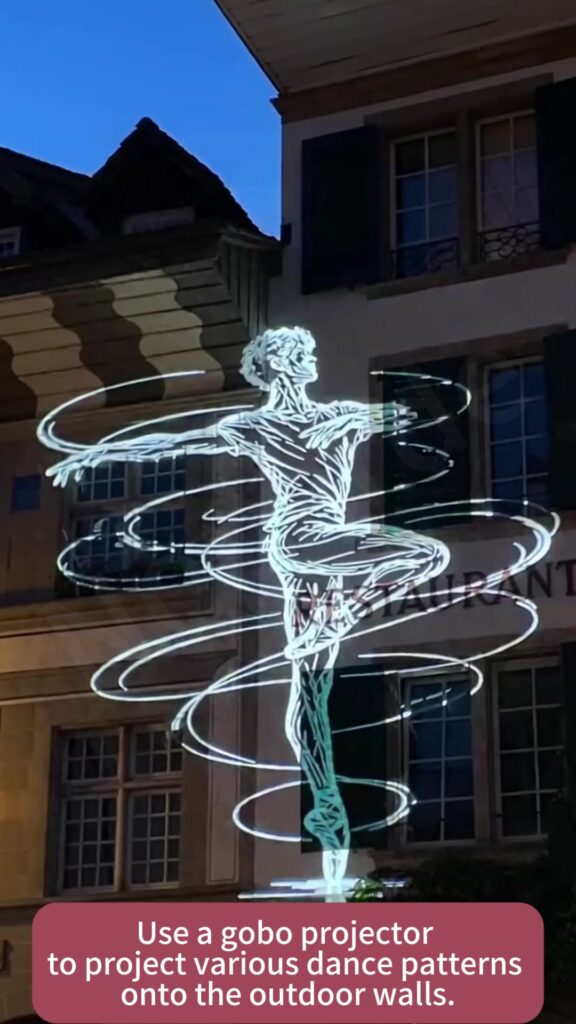
The clip is a short vertical video taken at dusk on a European-style, multi-storey facade with shuttered windows. Large white line-drawing, or wireframe, dance figures are projected onto the wall: first a standing figure wrapped in spiral rings, then a ballerina in a tutu en pointe across the windows. Later, an adjacent facade carries a pink and magenta wash, with a fragment of a line figure still visible. A physical restaurant sign — not a projected one — sits on the wall. The on-screen caption reads “Use a gobo projector to project various dance patterns onto the outdoor walls.”
Windows, shutters, and stone or stucco break the surface, so the figures are interrupted by openings. They remain readable, but the pattern has to be large enough, and placed carefully enough, to survive that broken elevation.
Where architectural pattern projection works
Architectural gobo projection of this kind belongs on commercial facades that need a decorative image after dusk, rather than a permanent painted mural or a heavy physical installation.
A dance figure, or another line drawing at building scale, can be used on a street frontage, a cultural venue, or a heritage-looking elevation during an evening event or a longer seasonal display. The same survey questions apply whether the image is pictorial or typographic: how large the figure should be relative to the windows, where it can sit without being lost in shutters or stone joints, and how much dusk or street lighting is already on the wall. A wash of color on an adjacent facade, as the clip later shows, can sit alongside the drawing, but the two treatments should be aimed so they do not fight each other at the corner.
This page is a demonstration of decorative gobo projection on an outdoor commercial wall. It should not be read as a confirmed project record, and “easy install” in the title should not be taken as a description of the site work. A facade with this many openings needs a proper survey before anyone assumes the mounting or the aiming will be simple.
What to specify before installation
Photograph the facade at dusk and decide where the figure should be centered so the main lines fall on solid wall rather than on glass. Pattern scale is the key decision: too small and the drawing disappears into the texture; too large and the window grid may cut it apart.
Set mounting height and aiming against that scale, judge brightness against dusk lighting, and confirm weather protection at the mounting point. Then agree the power supply and when the projection should run.
For outdoor commercial walls, the same site questions used when choosing an outdoor projector for business logos still apply.
FAQ
Will the pattern stay clear across windows and shutters?
It can remain readable, as the video shows, but openings will interrupt the lines. Plan the scale and the center point so the main figure sits as much as possible on solid wall.
Is this only for dance images?
No. The clip uses line-drawing dance figures, but the same architectural approach can be used for other decorative patterns or a brand mark, provided the artwork is tested against the actual facade.
What should we send to start a consultation?
Dusk photographs of the elevation, notes on windows and existing signs, the approximate mounting position and distance, the artwork you want to show, and the hours the projection should run.
Plan the project with Noparde
If you are scoping decorative gobo projection or architectural gobo projection on a commercial facade, send those site details — contact the Noparde project team.